Vertical Traffic Calming Measures
Speed Bumps
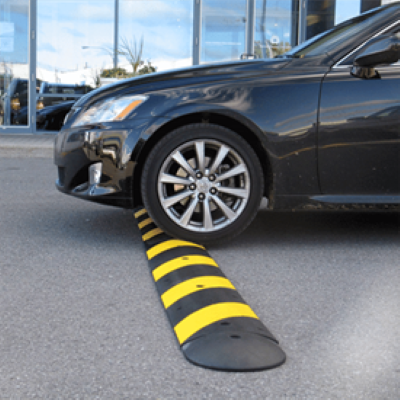
Speed bump is a low raised ridge across a roadway used to reduce vehicle speeds particularly in residential areas and school zones. By forcing drivers to reduce their speed, speed bumps help decrease the risk and severity of accidents, making streets safer for both pedestrians and cyclists.
Speed Humps
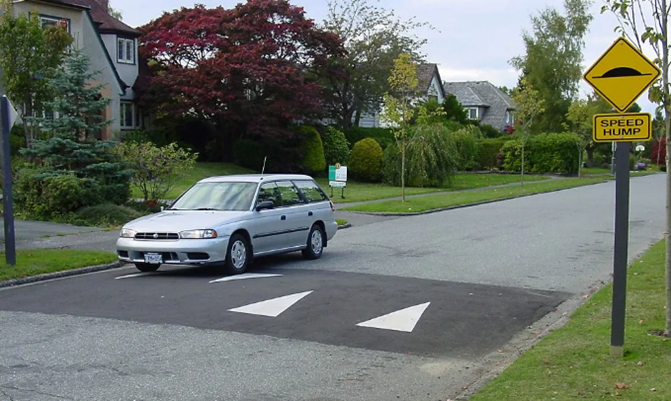
Speed humps are similar to speed bumps, but they are longer and more gently sloped while speed bumps are shorter and more abrupt. Speed humps are used on public roads to encourage lower speeds without causing excessive discomfort. They can also discourage cut-through traffic on residential streets and enhance pedestrian safety.
Speed Tables
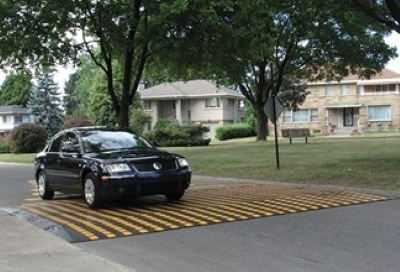
A speed table is similar to a speed hump, but longer and flatter. It is long enough for the entire wheelbase of a vehicle to rest on, which allows vehicles to maintain moderate speeds while still slowing down significantly. They are frequently used on low-volume streets or at crossings with high volumes of pedestrians. They can be used to raise crosswalks and reduce vehicular speeds on residential streets and school zones.
Speed Cushions
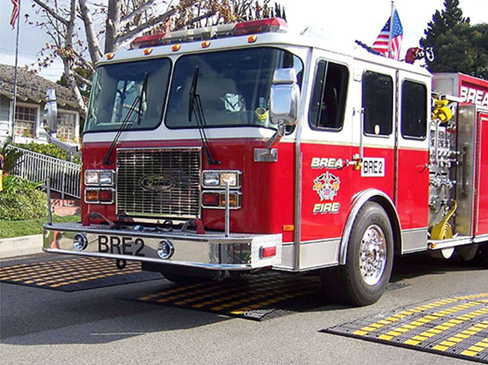
A speed cushion is a speed hump or speed table that includes wheel cutouts to allow larger, emergency-response vehicles such as fire trucks and buses to pass unaffected. They are typically used on key emergency response routes. They reduce vehicular speeds while maintaining emergency response times.
Raised Crosswalks
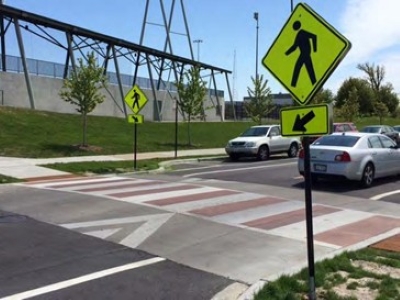
A raised crosswalk is a pedestrian crossing where the pavement is raised to the same level as the sidewalk, creating a flat, ramped surface. They improve pedestrian safety by making people more visible to drivers and encouraging motorists to yield. They also enhance accessibility for people using wheelchairs, strollers, or other mobility aids by eliminating the need for curb ramps.