Road Diet
Road Dieting
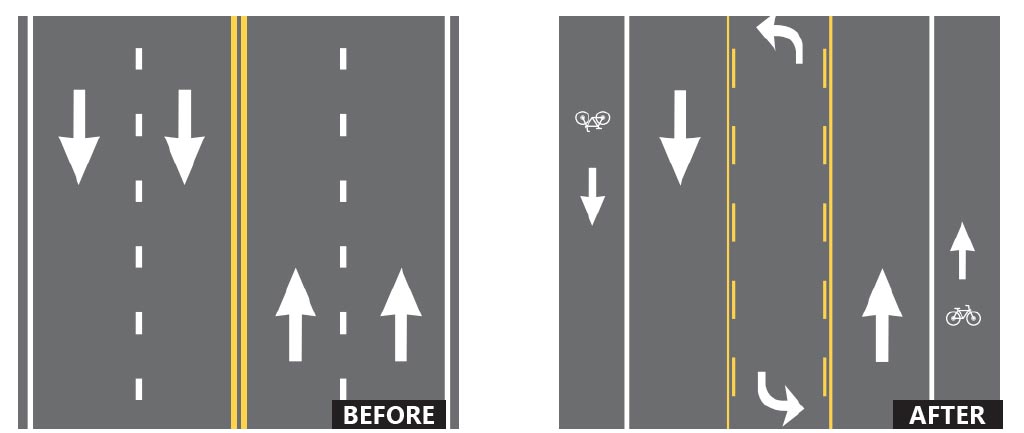
Road dieting is a traffic management strategy designed to enhance road safety and improve the quality of streets for all users. It involves reducing the number of travel lanes on a road or modifying the road layout to better accommodate pedestrians, cyclists, and transit users. Road dieting typically includes measures such as lane reduction, the addition of bike lanes, wider sidewalks, pedestrian crossings, and traffic calming features. Lane reduction involves decreasing the number of travel lanes to free up space which can be reallocated to accommodate other modes of transportation. This space can be used for bike lanes, pedestrian refuge islands, and wider sidewalks, improving overall safety and comfort for all road users. Traffic calming measures, such as speed bumps and curb extensions, help slow down vehicle traffic and further enhance safety. On-street parking can also serve as a buffer between pedestrians and moving vehicles.
Studies have found that implementing a road diet can reduce crashes by 19% to 47%, making it one of the most effective street design changes for improving safety. By reducing the number of lanes and adding features such as bike lanes and pedestrian crossings, road diets lower vehicle speeds and decrease the likelihood of crashes, resulting in fewer vehicle and pedestrian injuries. They can also improve traffic flow by reducing congestion, minimizing delays caused by turning vehicles, and enhancing intersection efficiency. Additionally, road diets make streets more accessible to a wider range of users by providing better facilities for cyclists, pedestrians, and transit riders. They also enhance neighborhood liveability by creating streets that are safer and more inviting. By encouraging walking, cycling, and public transit, road diets help reduce dependency on automobiles, leading to lower environmental emissions and improved air quality.
Road dieting 2
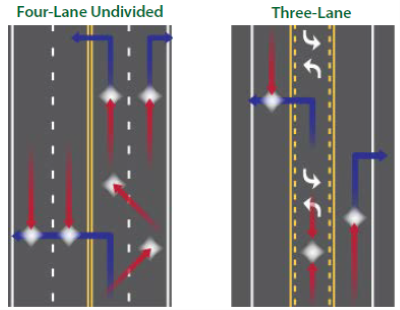
A 4-lane street is the best candidate for a road diet because its design creates several safety problems that a road diet can fix. With two travel lanes in each direction, left-turning vehicles frequently block the inside lane, forcing through-traffic to weave around them. This weaving increases the risk of sideswipe and rear-end crashes. In addition, the line of sight of left-turning vehicles is often obstructed by opposing traffic in the inside lane, making turns more dangerous. For pedestrians, crossing a four-lane street is especially dangerous because they are exposed to multiple lanes of fast-moving vehicles at once and have limited safe gaps to cross. By implementing a road diet, features such as dedicated turning lanes and pedestrian refuge islands can be added, reducing conflicts and creating a safer, more comfortable environment for all road users.