Bike Infrastructure
Bike Infrastructure
There are many different types of biking facilities that can be implemented. The type of bike lane that will be installed depends on factors such as traffic volume, vehicle speed, the type of street, and available street width. It is also important to understand what type of people will be using the bike lanes. Planners often group people into four categories, as shown below, based on their comfort level and willingness to ride a bike. Understanding these groups helps cities design infrastructure that meets the needs of all potential riders. In addition, engaging with the community to understand their needs is vital for building trust and gaining support for the project. The National Association of City Transportation Officials (NACTO) provides detailed guidance on selecting and designing bike facilities, helping cities match the right type of lane with local street conditions and rider needs.
Type of Cyclists
- Strong and Fearless: These individuals will ride their bike regardless of the roadway conditions. They are comfortable riding even with heavy traffic and high speeds, and do not depend on bike lanes or special facilities to feel safe. They view biking as a primary mode of transportation, not just a recreational activity. They represent less than 1% of the population.
- Enthused and Confident: These cyclists feel comfortable biking on most streets, especially those with bike infrastructure, though they tend to avoid the busiest, highest-speed roads. They often bike for commuting, errands, or recreation, and many current bicycle commuters fall into this category. They represent about 6% of the population.
- Interested but Concerned: This is the largest group, making up about 60% of the population. They are curious about biking and would ride more often if they felt safer. Their main concern is their safety when riding in traffic. Building safer facilities will encourage this portion of the population, including families, children, and seniors, to ride their bike.
- No Way No How: This is the portion of the population that has no interest in biking at all, whether for recreation or transportation. Their decision is not influenced by biking infrastructure, as they simply do not see biking as an option for themselves. They represent about 30% of the population.
Protected Bike Lanes
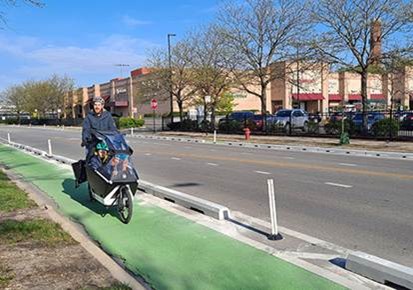
Protected bike lanes provide a physical separation between cyclists and moving or parked cars. These separations are created with concrete barriers or plastic bollards. By providing a physical separation between cyclists and other road users, protected bike lanes reduce the risk of dooring and significantly improve the safety of cyclists, making them the preferred bicycle accommodation. They are crucial on high-volume and high-speed streets to ensure the safety of cyclists in these dangerous conditions.
Buffered Bike Lanes
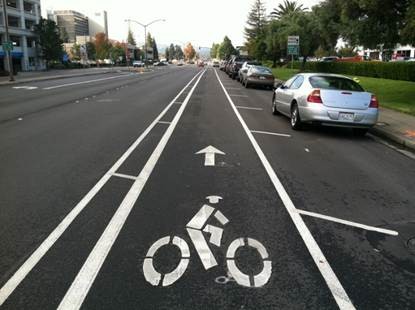
A buffered bike lane is a bike lane with a designated buffer space between the bike lane and moving traffic or parking lane. The buffered space is marked with painted lines that create a visual separation between the bike lane and other traffic. This separation provides cyclists with more space which encourages them to ride outside the door zone when used next to a parking lane to reduce the risk of dooring. The buffer zone also reduces the risk of overtaking and helps make the bike lane more visible to both cyclists and drivers, reducing the chance of collisions.
Conventional Bike Lane
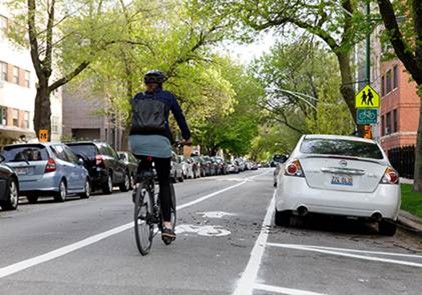
A conventional bike lane is a painted lane on the roadway that provides space for cyclists next to vehicle traffic. These lanes are marked with bicycle symbols, arrows, and a solid white line that separates the bike lane from the travel lane. They create a designated space for cyclists that improve their safety and comfort. However, since they do not include physical barriers like bollards or curbs, they offer limited protection from moving vehicles. They are most suitable on streets with lower traffic speeds and volumes
Shared Bike Lane
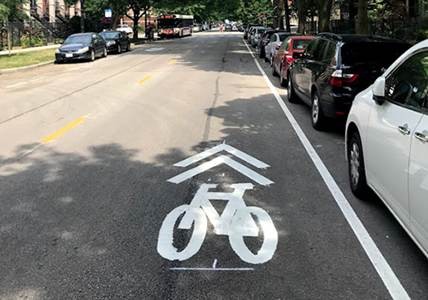
A shared bike lane is a lane on a roadway that is open to both cyclists and motor vehicles. They are marked with sharrows, which is a symbol of a bicycle with two chevron arrows above it, indicating that drivers should expect to share the lane with cyclists and also help cyclists position themselves within the lane. Shared bike lanes are not the preferred option as they offer minimal protection from vehicles making cyclists unsafe. However, they can be a cost-effective way to add cycling infrastructure to existing roads, especially when space is limited. They are suitable for residential areas and school zones, where vehicle traffic and speeds are low.
Neighborhood Greenways
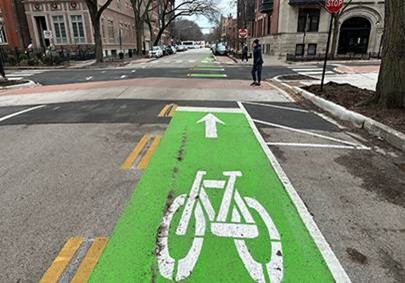
A neighborhood greenway is a low volume, low speed street that prioritizes bikes. They serve as a network of streets that offer a more comfortable and safer alternative to busy main roads for biking. These streets incorporate traffic calming measures such as speed humps, traffic circles, or curb extensions to reduce vehicle speeds and volumes. Neighborhood greenways can be installed on residential streets and are most appropriate on streets with high volumes of cut-through traffic.
Off-street Trails
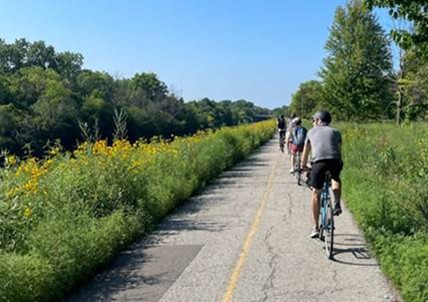
Off-street trails are dedicated paths that are separate from roads used by motorized vehicles. They are most commonly used for recreational purposes such as hiking and biking. They are usually unpaved and found in natural areas such as parks and forests. Because they are removed from vehicle traffic, off-street trails provide a safer and more comfortable environment for people biking. In many places, these trails also serve as key links in a larger network of paths and roadways, connecting neighborhoods, parks, and community destinations.
Unidirectional Bikeways
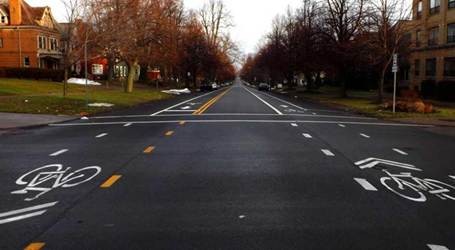
A unidirectional bikeway is a bike lane that only allows cyclists to travel in one direction, usually in the same direction as moving traffic, which makes it more intuitive for everyone on the street. They are typically built on both sides of a street, providing one lane for each direction of bicycle travel. They present fewer conflicts at driveways and unsignalized intersections, as well as limiting potential head-on conflicts from cyclists riding in opposite directions. Unidirectional bikeways also offer clear and direct connections to the overall transportation network.
Bidirectional Bikeways
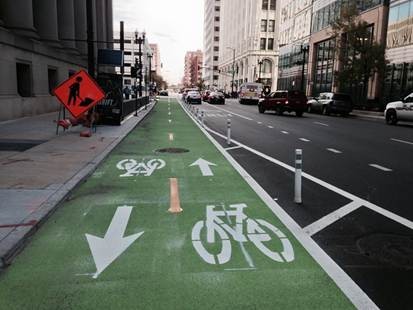
A bidirectional bikeway is a facility that allows bicycle movement in both directions on one side of a street. These bikeways are typically separated from vehicle traffic by a concrete barrier, bollards, or a parking lane. They are most suitable on streets with fewer intersections or driveways on one side to minimize turning conflicts. Bidirectional bikeways provide a safe and comfortable connection, especially when crossing one-way streets with higher vehicle volumes. However, they require careful design at intersections and driveways to reduce potential conflicts.
An example of a bidirectional bikeway is a contra-flow bike lane, which allows bicycle travel in the opposite direction of vehicle traffic. These are often installed on the left side of one-way streets to allow two-way bike travel, while removing conflicts with buses.