Health Impacts
Health Impact
Active transportation, including walking and cycling, offers numerous health benefits and helps meet the recommended 22 minutes of physical activity per day. Choosing these modes of transport for short trips instead of driving can easily achieve this daily goal.
Physical Health
Obesity:
Complete streets help reduce obesity by encouraging more walking and biking through safe, accessible infrastructure. Increased active transportation directly counters sedentary lifestyles, as obesity risk rises by 6% for each hour spent in a car but decreases by 4.8% for every additional kilometer walked. Communities with low biking and walking rates tend to have higher levels of obesity, diabetes, and high blood pressure, highlighting the health benefits of active travel. Regular walking or biking such as 30 minutes a day can also lower the risk of breast cancer in women, improve mental health in men, and promote overall physical activity. People living in walkable neighborhoods naturally engage in more exercise, making complete streets a powerful tool in combating obesity and related chronic diseases.
Diabetes:
Complete streets can help reduce diabetes rates by creating safe, accessible environments that encourage biking, walking, and other forms of active transportation. These forms of active transportation help prevent and manage diabetes by improving blood sugar control and increasing insulin sensitivity. These activities enable the body to use glucose more efficiently, which lowers blood sugar levels and reduces the risk of spikes. Regular physical activity also helps prevent insulin resistance, a key factor in the development of type 2 diabetes, thereby supporting long-term metabolic health.
Mental Health
Stress:
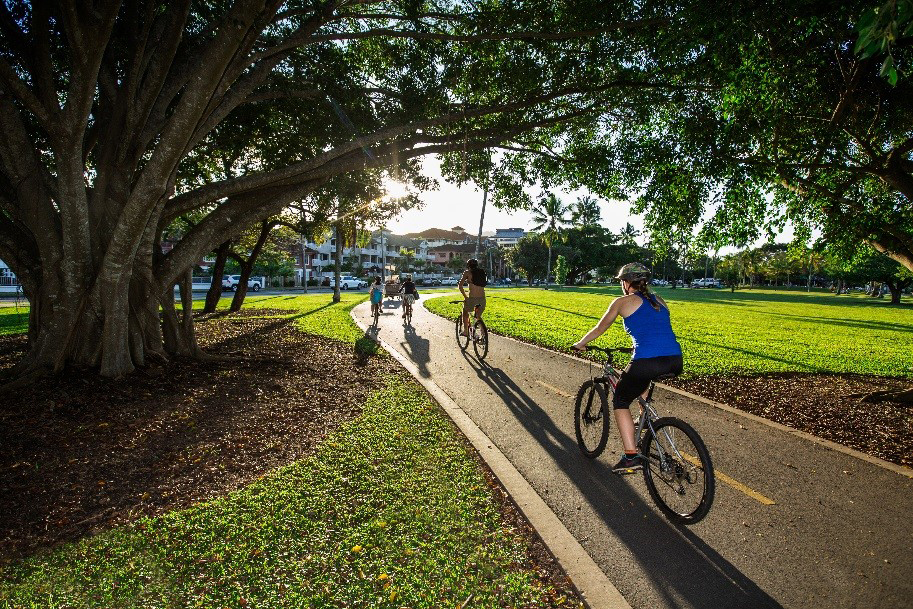
Complete streets help reduce stress by designing roadways that calm traffic and create safer, more welcoming spaces for all users. In car-dominated environments, many drivers experience aggravation, which can lead to higher speeds, aggressive driving, and situations that frighten pedestrians and cyclists. These unsafe conditions discourage biking and walking and reduce the presence of children in public spaces. By implementing features that lower vehicle speeds and prioritize safety such as protected bike lanes, wider sidewalks, and pedestrian crossings, complete streets create calmer, more predictable traffic patterns. This not only reduces stress for drivers, cyclists, and pedestrians but also fosters a more comfortable and inclusive community environment. Walking and cycling also release endorphins that improve mood and reduce symptoms of depression and anxiety. Regular exercise lowers stress levels, boosts cognitive function, and may decrease the risk of cognitive decline and dementia.
Levels of Stress:
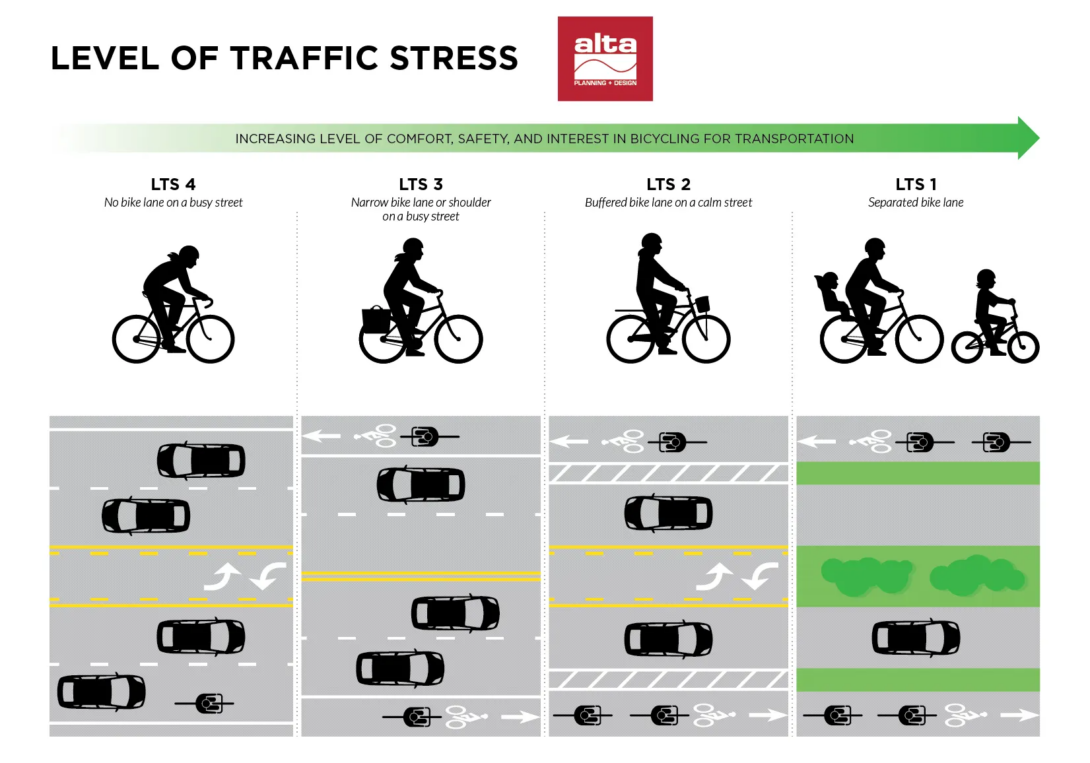
Levels of Stress:
Level 1:
LTS 1 represents the lowest level of traffic stress and is suitable for all cyclists, including children who have been trained to cross intersections safely. At this level, traffic speeds are low, and roads typically have no more than one lane in each direction, making intersections easy for both children and adults to cross. Common examples of LTS 1 environments include residential local streets and separated bike paths or cycle tracks, where little attention is required to navigate safely.
Level 2:
LTS 2 represents a low level of traffic stress but requires more attention than young children are expected to manage, making it suitable for teenage and adult cyclists with adequate bike-handling skills. At this level, traffic speeds are slightly higher, though speed differentials remain low, and roadways may have up to three lanes in both directions. Intersections are still manageable for most teens and adults. Typical LTS 2 environments include collector-level streets with bike lanes or streets within a central business district.
Level 3:
LTS 3 represents a moderate level of traffic stress and is generally suitable for most observant adult cyclists. Traffic speeds are moderate and can occur on roadways up to five lanes wide in both directions. While conditions are more complex, intersections at this level are still perceived as safe by most adults. Typical LTS 3 environments include low-speed areas with bike lanes or moderate-speed, non-multilane roadways.
Level 4:
LTS 4 represents the highest level of traffic stress and is suitable only for experienced and highly skilled cyclists. At this level, traffic speeds range from moderate to high, and roadways can span from two lanes to more than five lanes in both directions. Intersections are often complex, wide, and high in volume or speed, making them difficult to cross and frequently perceived as unsafe by most adults. Typical LTS 4 environments include high-speed or multilane roadways with narrow bike lanes or no designated bike facilities at all.